

Why Bees Are Important: The Story Behind Every Spoonful of Honey
Discover why bees are important and how they shape the honey we enjoy every day. A story of nature, balance, and World Bee Day.


Soft, smooth lips don't require a 12-step routine or a shelf full of synthetic products. In most cases, the simplest approach is also the most effective and a honey lip scrub is one of the clearest examples. Two natural ingredients, sixty seconds of effort, and a noticeable difference in how your lips feel.
But here's what most DIY guides leave out: not all honey produces the same result. The type of honey you use raw or processed directly affects how nourishing the scrub will be. That's why at Goldswarm, we built our entire range around raw, unprocessed African honey, the kind of honey that retains the enzymes, antioxidants, and humectant properties that make it work as well in skincare as it does on toast.
Below, you'll find the recipe, the science behind why it works, and what to look for in the honey itself.
A honey lip scrub is a gentle exfoliating treatment made by combining honey with a fine, natural exfoliant most commonly sugar. Honey acts as the binder and moisturizing agent; sugar provides mild physical exfoliation that lifts away dry, flaky skin from the surface of the lips.
The result is a two-ingredient treatment that's transparent, customizable, and free of the parabens, synthetic fragrances, and emulsifiers found in many commercial lip scrubs. You know exactly what's going on your lips because you put it there yourself.
This is the basic recipe we use ourselves. Two ingredients, sixty seconds, no equipment beyond a small bowl and a spoon.
Ingredients
Instructions
Tip: Make it fresh each time. The mixture is best used immediately the texture is most consistent right after mixing.
Optional Variations
Once the basic version is part of your routine, you can experiment:
Keep additions minimal. The whole point of this scrub is its simplicity extra ingredients can introduce irritation, especially on already-thin lip skin.

For most people, two to three times per week is the sweet spot. Daily exfoliation can compromise the lip barrier and lead to sensitivity exactly the opposite of what you want.
A simple weekly rhythm:
Consistency over intensity. A small ritual repeated weekly will do more than an aggressive session done once.
The honey you use is the most important variable in this recipe. If you want the antibacterial enzymes, the antioxidants, and the rich texture that make a honey lip scrub actually work, you need raw, unprocessed honey.
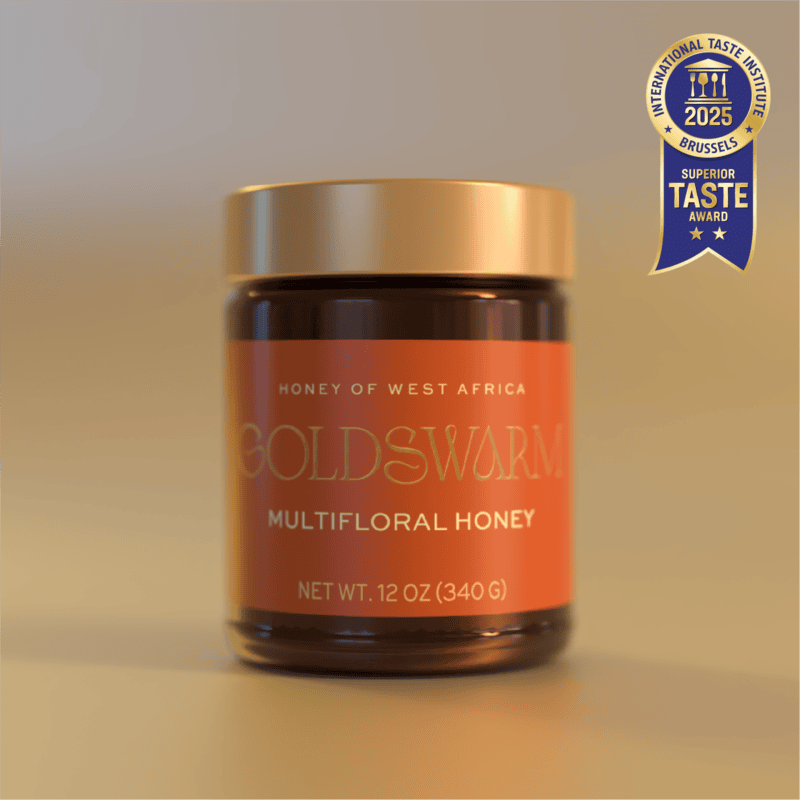
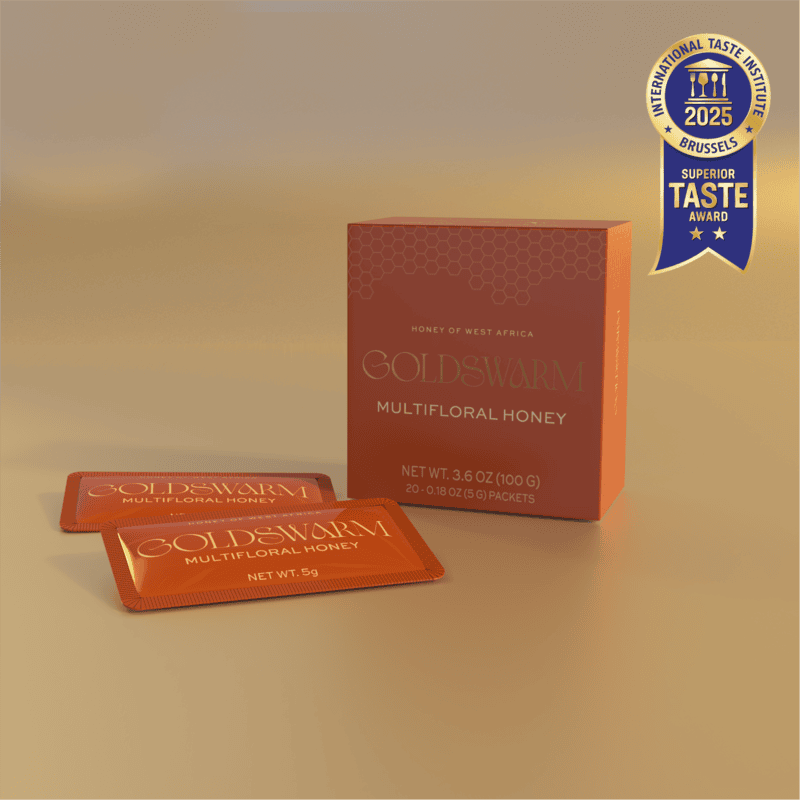
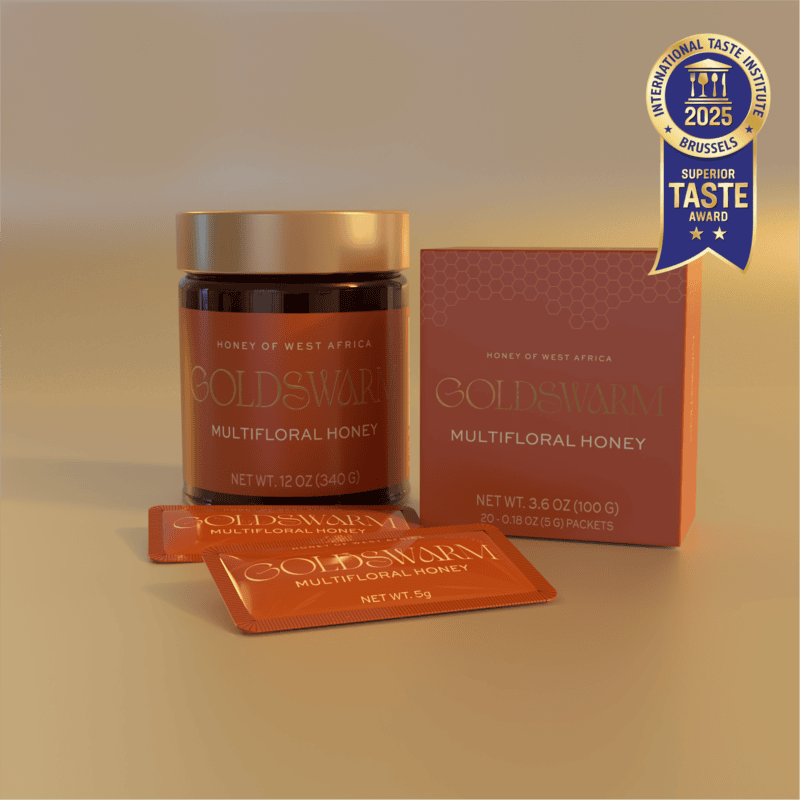
Goldswarm sources raw African honey directly from beekeepers who follow traditional, low-heat methods so what ends up in your lip scrub still has everything bees originally put in it.
Lip skin behaves differently from the skin on the rest of your face. According to the American Academy of Dermatology, lips have no oil glands and a much thinner stratum corneum than facial skin, which means they can't produce or retain moisture the same way. Research published in the Journal of Cosmetic Dermatology also confirms that lip skin has a higher rate of transepidermal water loss (TEWL) and lower water content than the skin on the cheeks.
In practical terms, that means your lips are more prone to:
Gentle exfoliation, done one to three times per week, helps lift away that dead-skin buildup so the surface looks smoother and lip balms absorb more effectively. The keyword is gentle overdoing it can damage the already-delicate barrier.
Honey isn't just a sweetener it's one of the most studied natural ingredients in dermatology. A 2013 review in the Journal of Cosmetic Dermatology (Burlando & Cornara, indexed by PubMed) found that honey acts as an emollient, humectant, and soothing agent in cosmetic formulations, helps regulate skin pH, and can support the skin's natural barrier.
Three properties make it especially well-suited for a lip scrub:
There's a critical caveat here, though: most of these properties depend on the honey being raw.
This is where most DIY recipes fail. They tell you to grab "any honey from the pantry," but the typical squeeze-bottle honey on supermarket shelves has been pasteurized at temperatures of 140–160°F (60–70°C) and ultra-filtered to remove pollen and improve clarity.
Heat is the problem. According to research published in the Journal of Agricultural and Food Chemistry, heating honey to 160°F for just 15 minutes can reduce its total phenolic content by 14–30%, depending on the variety. Other studies have measured antioxidant capacity losses of 30–50% in highly processed honey compared to raw versions. Glucose oxidase the enzyme responsible for honey's antibacterial activity begins to break down at temperatures as low as 104°F (40°C).
In short:
|
Feature |
Raw Honey |
Processed Honey |
|
Antioxidants |
Fully preserved |
Up to 30–50% lost |
|
Enzymes (glucose oxidase) |
Active |
Largely degraded |
|
Pollen & propolis |
Retained |
Filtered out |
|
Texture in scrub |
Thick, clings to lips |
Thin, runs off |
If you're going to spend a few minutes making something at home, it makes sense to use the version of the ingredient that still has its active properties intact.
Within the world of raw honey, origin matters. African raw honey the kind we source at Goldswarm has a few distinctive characteristics that make it especially well-suited for skincare uses like a lip scrub:
These aren't just marketing points they're the reason a Goldswarm lip scrub feels different on the lips than one made with a generic supermarket squeeze bottle.
A simple raw-honey lip scrub can support your routine in five concrete ways:
No, two to three times per week is ideal. Daily exfoliation can compromise the lip barrier and lead to sensitivity, especially because lip skin is thinner and more delicate than facial skin.
Raw, unprocessed honey. Pasteurized supermarket honey has lost a significant share of its antioxidants and enzymes by some measures, 30–50% of antioxidant capacity. Raw African honey, like the multifloral and acacia varieties from Goldswarm, retains those active compounds and has a thicker, scrub-friendly texture.
Generally yes, when you use fine sugar, light pressure, and avoid additives like cinnamon. If your lips are very sensitive, do a small patch test first and use the scrub no more than once a week.
It's best to make it fresh each time. The texture and consistency are most reliable right after mixing, and there's no need to store something that takes thirty seconds to make.
Yes, as long as the grain is fine. Brown sugar adds a richer texture and a slightly different feel, but coarse brown sugar can be too abrasive on thin lip skin.
Look for honey labeled raw, unfiltered, and unpasteurized and ideally from a transparent source. Goldswarm ships raw African honey directly to U.S. customers, with each batch sourced from traditional beekeepers and minimally processed. You can see our honey here.
If your lips are cracked or actively irritated, hold off on exfoliation focus on healing first with a thick occlusive balm. Once the cracks have closed, a weekly honey scrub can help prevent buildup of dry skin going forward.
Adding a honey lip scrub to your routine isn't a major commitment it's two ingredients, sixty seconds, two or three times a week. But it's the kind of small, repeated practice that adds up. Over a few weeks, lips feel smoother, balms work better, and the seasonal flaking that used to feel inevitable starts to fade.
The only real decision is which honey you'll use. Make it a good one.

