

Spring Rituals: 5 Easy Ways to Build a Daily Honey Routine
Discover 5 easy ways to build a daily honey routine this spring, from warm lemon water and tea rituals to seasonal fruit, skincare, and light cooking ideas.


Every third bite of food you eat exists because a bee made it possible. According to the Intergovernmental Science-Policy Platform on Biodiversity (IPBES), approximately 75% of the world’s food crops depend at least in part on animal pollination and bees are by far the most important pollinators among them.
That single fact reframes everything. Understanding why bees are important is not an abstract environmental concern. It’s about the food on your plate, the honey in your pantry, and the health of ecosystems that sustain agriculture worldwide.
Bees transfer pollen from the male structures of a flower (anthers) to the female structures (stigma), enabling fertilization and fruit development. A single honeybee colony can visit up to 300 million flowers in a day. Without this process, many plants simply cannot reproduce.
The economic value of pollination is staggering. The USDA estimates that bee pollination contributes over $15 billion annually to U.S. crop production alone. Crops like almonds, blueberries, cherries, and avocados are almost entirely dependent on bee pollination.
But bees don’t just serve agriculture. In wild ecosystems, they sustain the plant diversity that supports insects, birds, and mammals across entire food chains. Remove bees, and you don’t just lose honey you lose the structural foundation of multiple ecosystems.
Bee populations have been declining for decades. In the United States, beekeepers reported losing an average of 48% of their colonies during the 2022–2023 season, according to the Bee Informed Partnership. Globally, the situation is equally alarming.
The causes are well-documented: pesticide exposure (particularly neonicotinoids), habitat loss due to monoculture farming, climate change disrupting flowering patterns, and parasites like the Varroa destructor mite. These pressures often compound a colony weakened by pesticides becomes more vulnerable to disease.
This decline has direct consequences for food security. The FAO warns that pollinator loss threatens food systems in both developed and developing nations. It’s not a future risk it’s happening now.
Every jar of honey begins the same way: a bee lands on a flower, collects nectar, and carries it back to the hive. Inside, worker bees process the nectar by adding enzymes and reducing its water content through evaporation.
What makes the honey different is what makes the landscape different. In the wildflower regions of West Africa across the forest margins of Nigeria and Benin bees forage from a diverse range of native plants that don’t exist in large-scale monoculture environments. This biodiversity creates a complexity of flavor that single-origin industrial honeys can’t replicate.
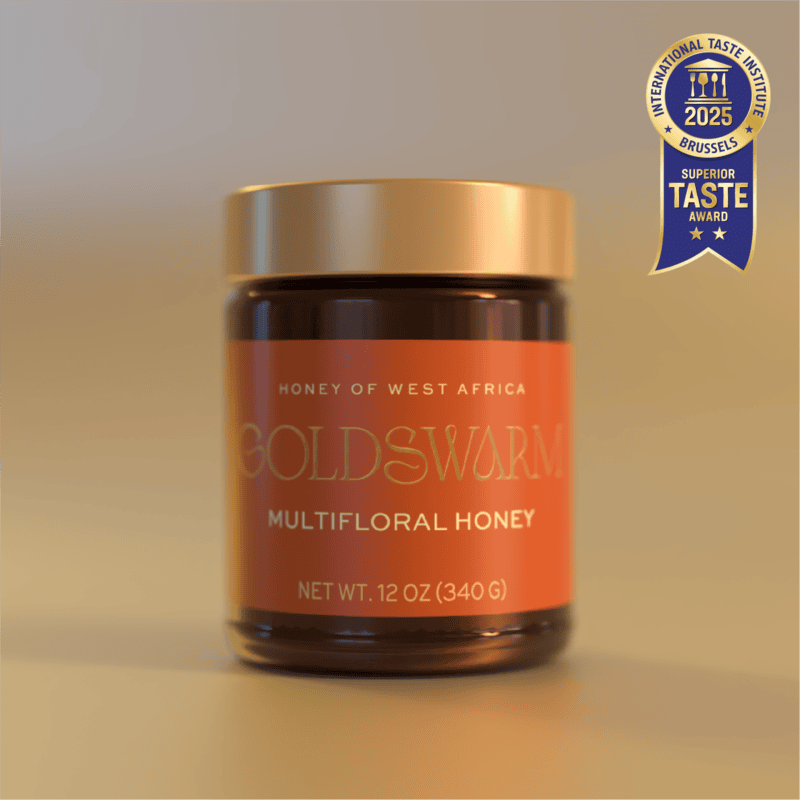
At Goldswarm, this is the honey we bring to your table. Our beekeepers in West Africa use traditional harvesting methods that prioritize the health of the colony. No hives are depleted. No corners are cut.
Most honey sold in U.S. supermarkets has been ultrafiltered and pasteurized. These processes extend shelf life and create a uniform texture, but they also strip away pollen, enzymes, and many of the aromatic compounds that give honey its character.
Raw honey, by contrast, is minimally processed. It retains its natural pollen content, active enzymes like diastase and invertase, and the full spectrum of flavor compounds from its floral sources. The taste difference is immediate: where processed honey tastes generically sweet, raw honey has depth floral notes, earthy undertones, and a finish that varies by region and season.
A 2012 study by Food Safety News found that 76% of honey samples purchased from major U.S. grocery stores had all pollen removed, making it impossible to trace their origin. Choosing raw honey isn’t just about flavor it’s about transparency.
African honey, particularly from West Africa, is distinct for several reasons. The bees primarily Apis mellifera adansonii, the West African subspecies are uniquely adapted to tropical climates and have never been exposed to the industrial beekeeping practices common in the U.S. and Europe.
The floral sources are equally distinctive. West African transitional forests host hundreds of native plant species that bloom across different seasons, giving the honey a complex, multi-floral character. This is not the uniform taste of clover or orange blossom honey it’s a reflection of an entire ecosystem.
Goldswarm works directly with beekeeping communities in these regions. Our honey is harvested by hand, strained never ultrafiltered and shipped without heating or blending. What arrives in your home is exactly what the bees produced.
World Bee Day, observed annually on May 20, was established by the United Nations in 2017 to raise awareness about the role of pollinators in food security and ecosystem health. The date honors the birthday of Anton Janša, a pioneer of modern beekeeping from Slovenia.
It’s more than a symbolic date. World Bee Day has become a global platform for education and action, connecting conservation efforts with everyday choices like what honey you buy and where it comes from. It also aligns with the broader conversation around sustainability and World Environment Day, observed each June 5.
Protecting bees doesn’t require a radical lifestyle change. Here are practical ways to make a difference:
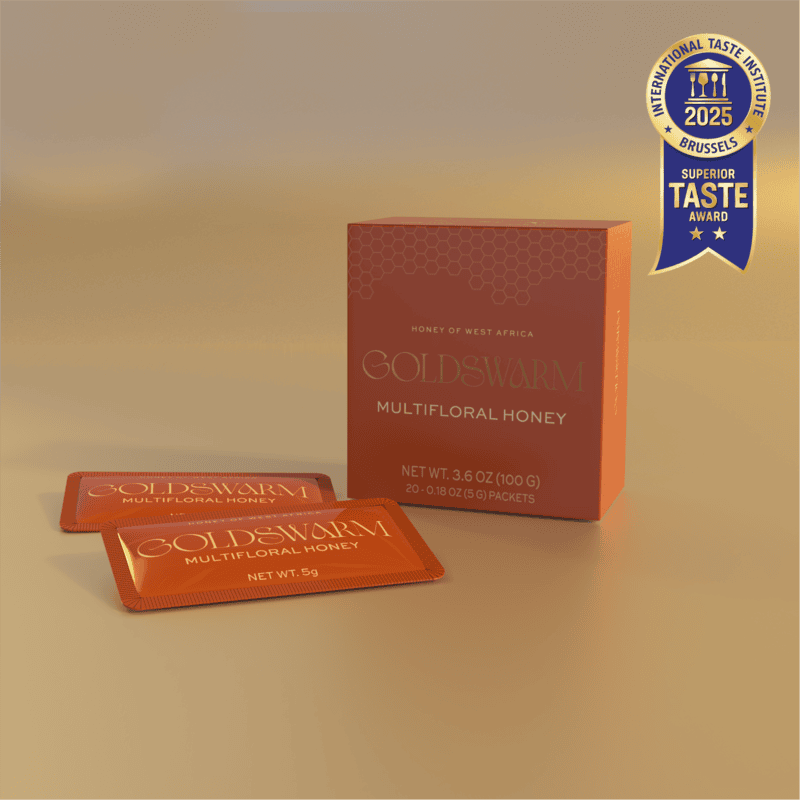
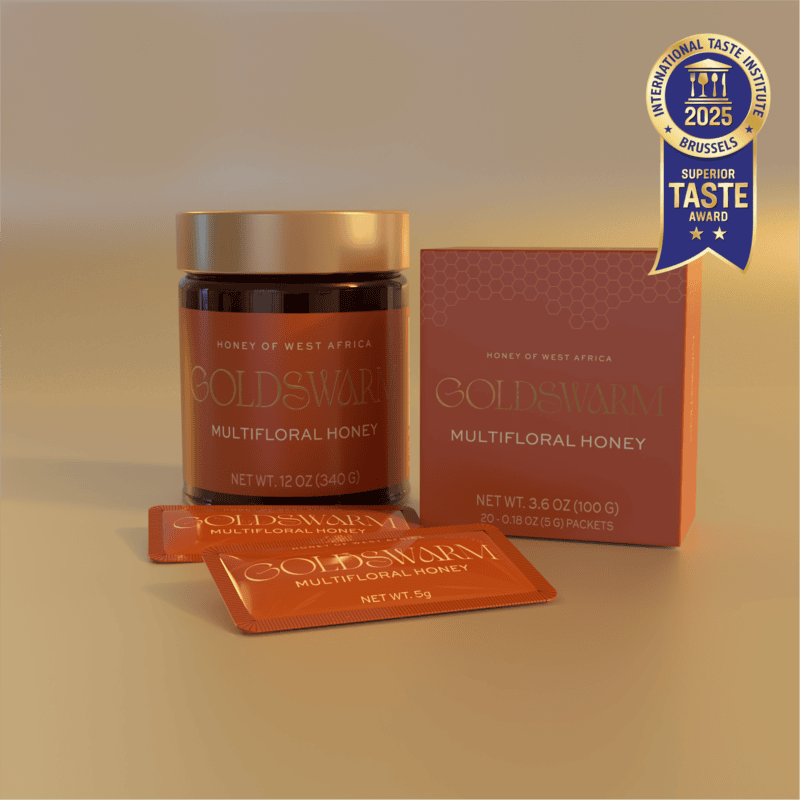
Goldswarm Raw Honey is sourced from West African wildflower regions and delivered to your door with nothing added or taken away.

Bees are the world’s most effective pollinators, responsible for helping approximately 75% of food crops reproduce. Beyond agriculture, they sustain wild plant diversity, which supports entire food chains including insects, birds, and mammals. Without bees, both natural ecosystems and human food systems would face serious disruption.
World Bee Day is celebrated every year on May 20. It was established by the United Nations General Assembly in 2017 to highlight the essential role of bees and other pollinators in maintaining healthy ecosystems and supporting global food security.
If bees disappeared, the production of many fruits, vegetables, and nuts would drop dramatically. Crops like almonds, apples, and avocados depend almost entirely on bee pollination. The cascading effect on wild ecosystems would be equally severe, as many plants would fail to reproduce, leading to habitat collapse for other species.
Raw honey is minimally processed it’s strained but never ultrafiltered or pasteurized. It retains its natural pollen, active enzymes, and the full flavor profile of its floral source. Regular (processed) honey is heated and filtered to create a uniform texture and longer shelf life, but this removes much of its nutritional content and traceability.
Yes. Raw African honey is safe for adults and children over 12 months. Like all raw honeys, it should not be given to infants under 12 months due to the general risk of botulism spores. Goldswarm’s honey is handled according to food safety standards throughout its supply chain.
African honey, particularly from West African wildflower regions, has a complex, multi-floral flavor profile. Expect deeper, earthier tones compared to the uniform sweetness of common clover or acacia honey, with floral and sometimes slightly smoky undertones that reflect the biodiversity of the landscape.
Authentic raw honey tends to crystallize over time this is a natural sign of quality, not spoilage. It also has a complex aroma beyond simple sweetness. Ultrafiltration, which removes pollen, makes it impossible to verify a honey’s origin. Choosing a brand like Goldswarm that provides full traceability is the most reliable way to ensure you’re getting real honey.
Plant pollinator-friendly flowers like lavender, sunflowers, and wildflowers. Avoid using neonicotinoid pesticides in your garden. Support beekeepers who practice sustainable harvesting. And choose raw, traceable honey from brands that prioritize colony health over mass production.

