

Can You Make Kombucha with Honey? A Complete Guide to Jun Tea (Plus Recipe)
Yes, you can brew a kombucha-style tea with honey. Meet jun tea: a lighter, drier ferment made with green tea and raw honey. Full guide plus recipe inside.


Training draws down your stored carbohydrate (glycogen) and puts stress on muscle tissue. What you eat afterward helps replace the first and supports the repair of the second.
A smoothie is simply a convenient way to do both at once — it's cold, easy to drink when your appetite is low, and quick to put together. It's most useful when another session is coming soon: a two-a-day, a race the next morning, back-to-back training days. When you have plenty of time before your next workout, a normal balanced meal does the job just as well.
Carbohydrate replenishes glycogen. After hard exercise, carbohydrate intake is the main factor determining how quickly your glycogen stores come back. That's the primary job of the honey and fruit here.
Protein supports repair. Protein supplies the amino acids used to rebuild muscle tissue. Worth knowing: when carbohydrate intake is already adequate, adding protein doesn't speed glycogen replacement — it does a different job. So this isn't carbs or protein. It's carbs to refuel, protein to rebuild.
Where honey fits. Honey naturally provides both glucose and fructose, which makes it a convenient way to include a mixed carbohydrate source in a recovery smoothie. The two sugars are absorbed through different pathways in the gut, and research on glucose–fructose blends generally shows fructose contributes to restoring liver glycogen while glucose serves muscle glycogen. That's a fair reason to like honey as a real-food recovery carbohydrate — not a claim that honey outperforms other carbohydrates for recovery.
Two versions, same goal. Each makes one large serving (about 16 oz / 475 ml).
Thick, creamy, and slightly tangy — closer to a light milkshake.
Lighter and more fruit-forward; oats give it a fuller, creamier body.
Add the liquid to the blender first, then the remaining ingredients. Blend on high for 45–60 seconds, adding more liquid a splash at a time until the texture is right. Taste and adjust the honey before serving.
If you include oats in the dairy-free version, they'll continue to thicken as they hydrate — add a little extra plant milk to compensate.
Enjoy it soon after training, particularly if you have another workout or event within the next day. If your jar has crystallized, a smoothie is the ideal use for it — the blender takes care of the texture, no warming needed.
Values are estimates derived from USDA FoodData Central and vary with the milk, yogurt, protein powder, and optional ingredients you choose.
| Path A (Creamy) | Path B (Dairy-Free) | |
|---|---|---|
| Calories | ~390 kcal | ~450–540 kcal |
| Carbohydrate | ~73 g | ~75–90 g |
| Protein | ~23 g | ~25–35 g |
| Fat | ~2–4 g | ~4–7 g |
| Added sugar (from honey) | ~26 g | ~35 g |
Both versions supply carbohydrate and protein, though individual recovery needs vary with body size, workout duration and intensity, and when you're training next. Use slightly more honey after a long endurance session, and less after a shorter or lighter one.
Honey delivers sweetness and carbohydrate in a minimally processed, easy-to-blend form. What sets a raw, single-origin honey apart here is mostly what you can actually taste and trace: real floral character instead of flat sweetness, and a known origin rather than a blended commodity syrup. Its natural glucose–fructose composition is a genuine practical advantage in a recovery drink.
That said, honey is still added sugar. Use an amount that fits the workout you've just done and your overall diet — see how honey compares to sugar for the full comparison.

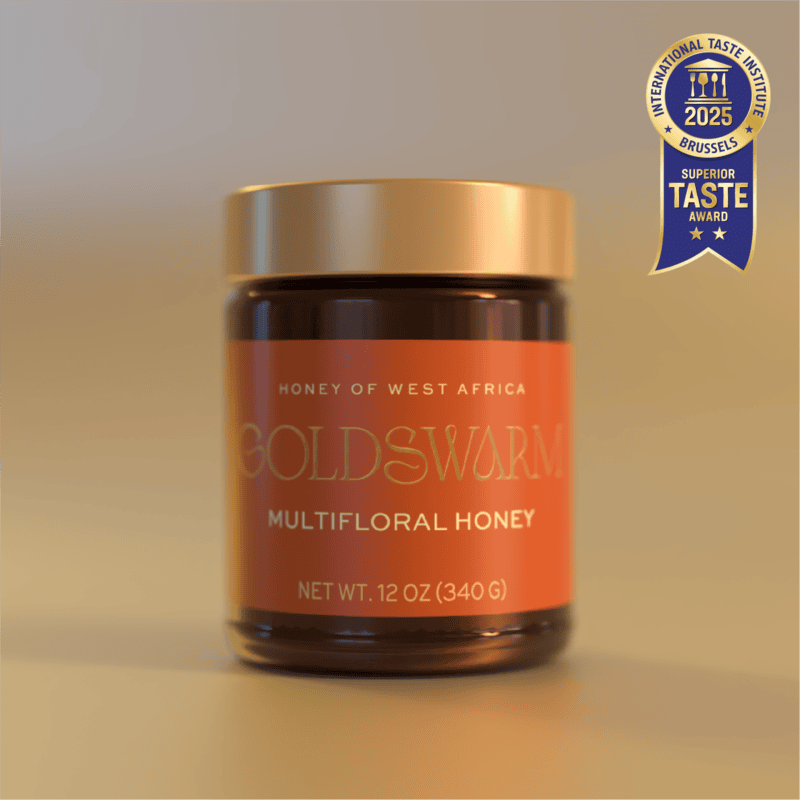
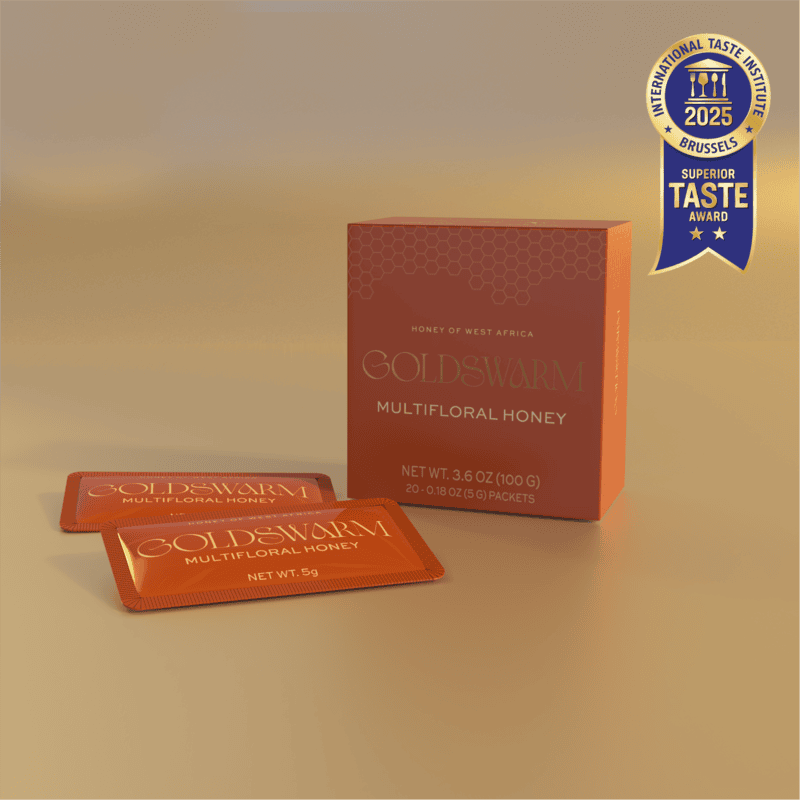
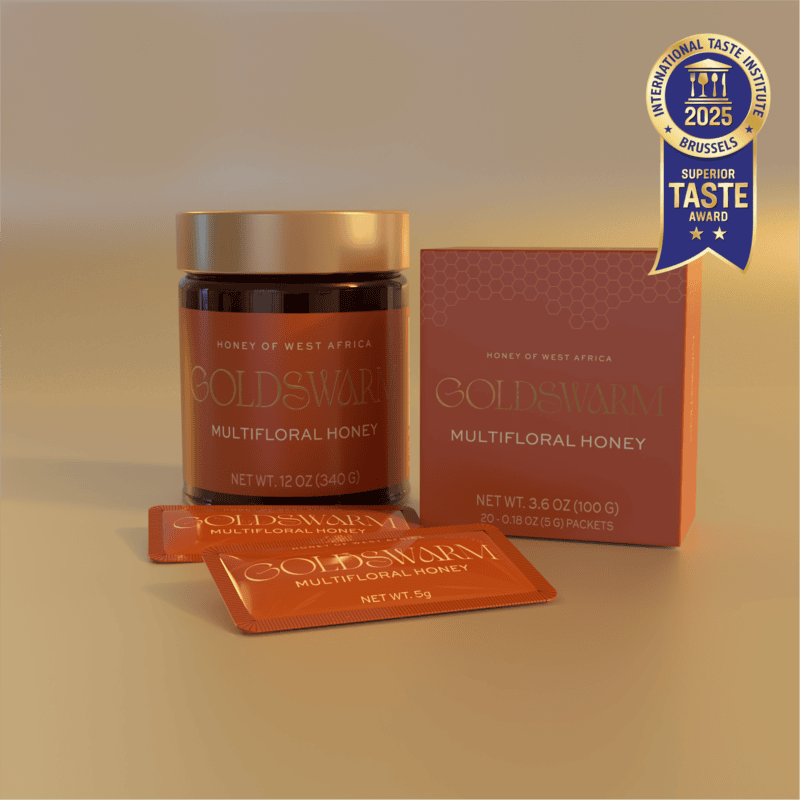
This smoothie is ideal after training, when you're back home with a blender. For convenient carbohydrate before or during a workout, our To-Go Packets deliver the same raw, single-origin West African honey in a portable, single-serve format — the kind of fuel our whole athlete-focused lineup is built around. Keep the packets in your gym bag or running belt, and save the smoothie for afterward. (For more on fuelling the front end of a session, see our natural pre-workout guide.)
Soon after training is a reasonable target, and it matters most when you'll be training again within about 24 hours. If your next session is further off, timing is far less critical and a normal meal works fine.
As a recovery carbohydrate, yes. Carbohydrate is what replenishes glycogen after exercise, and honey is a convenient real-food source that naturally contains both glucose and fructose. It's a carbohydrate source — not a proven performance enhancer.
No. Honey covers the carbohydrate side of recovery and contains almost no protein. Pair it with a protein source — Greek yogurt, milk, or a plant protein — which is exactly what this recipe does.
Yes — Path B uses plant milk and plant protein. Note that honey isn't considered vegan by everyone, so adjust to your own definition.
It's best blended fresh. For convenience, portion the fruit and honey into freezer bags, then blend with the liquid and protein when you're ready. A finished smoothie will keep a few hours in a sealed bottle in the fridge — shake before drinking.
| Yield | 1 large serving (~16 oz / 475 ml) |
| Blend time | About 1 minute |
| Storage | Best served fresh; refrigerate a few hours if needed |
| Make-ahead | Pre-portion fruit + honey and freeze; blend fresh |
| Scaling | Doubles cleanly — add liquid in small increments to keep the texture |
Path A drinks like a light milkshake: thick and cold, with the yogurt and berries bringing a little tartness and the banana rounding it out. Path B is lighter and cleaner, with the fruit further forward; add the oats and it gains a fuller, oat-milk-like body.
Goldswarm's raw West African wildflower honey adds gentle floral notes that lift the berries rather than flattening everything into plain sweetness. Add it last, blend briefly, and taste before pouring — you're aiming for balanced, with the berries still slightly tart underneath. Serve immediately, while it's still frosty.
Never give honey to a child under 12 months, due to the risk of infant botulism. If you have diabetes or manage blood glucose, honey raises blood sugar like other sugars and should be counted accordingly — check with your care team. If you have allergies to any ingredient here, substitute or skip it. This article is general information, not medical or individualized nutrition advice; for tailored guidance, speak with a registered dietitian.

