


Honey Lip Scrub: How to Make It at Home (and Why Raw Honey Works Best)
A simple two-ingredient honey lip scrub for soft, smooth lips and the science behind why raw, unprocessed honey makes all the difference.


A honey hair mask is one of the simplest ways to bring moisture, shine, and softness back to your hair using a single ingredient. Raw honey is classified in cosmetic science as a humectant and emollient, which means it helps draw moisture in and smooth the hair surface. Mix 2 tablespoons of Goldswarm Natural Raw Honey with a little warm water, work it through damp hair, leave it for 20 to 30 minutes, and rinse. That is the whole method. Below you will find five variations for different hair needs, the science behind why it works, and the safety notes worth reading first.
If you have tried a honey face mask, the logic here will feel familiar. Hair, like skin, loses moisture to dry air, heat styling, sun exposure, and frequent washing. The result is hair that feels rough, looks dull, and tangles easily.
Honey has been used in hair care across many cultures for centuries, and modern cosmetic formulators still rely on it. Honey and its derivatives appear as ingredients in commercial shampoos and conditioners precisely because of their moisture-binding behavior. A DIY mask simply gives you that same ingredient in its most direct form, with full control over what touches your hair.
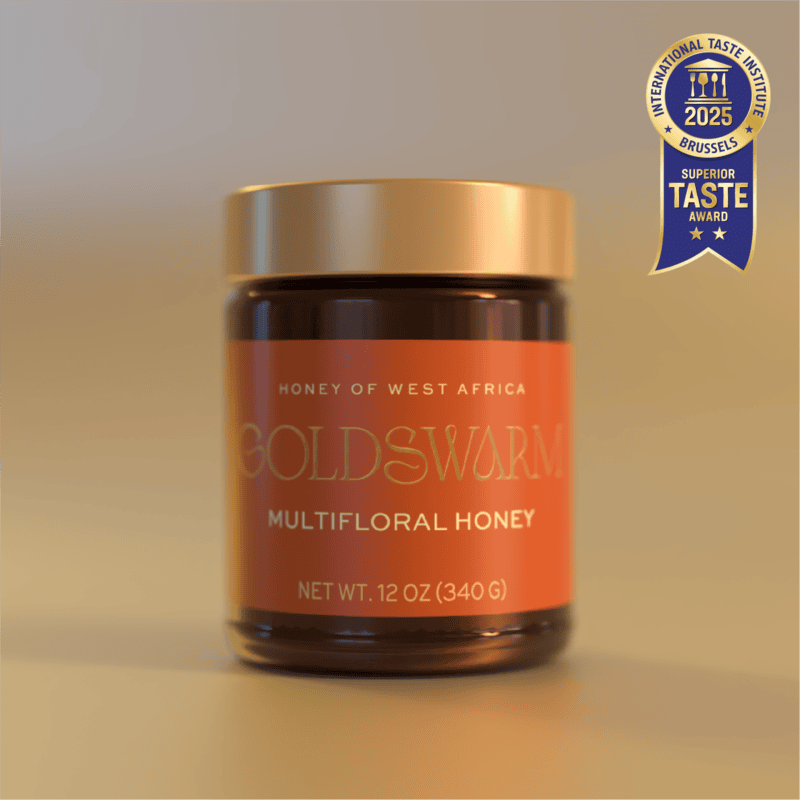
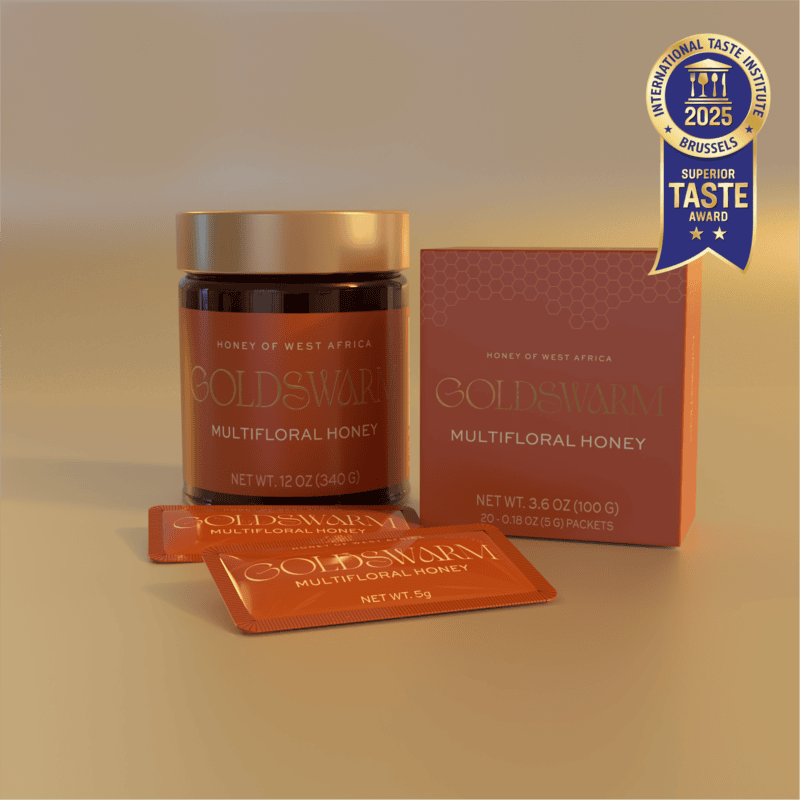
The honey you choose matters. Goldswarm Natural Raw Honey is harvested in West Africa from wildflowers, is free of additives, and is minimally processed, so you are working with honey as close to its natural state as possible.
Three properties explain why honey earns its place in hair care, and each is documented in peer-reviewed cosmetic literature rather than folklore.
It is a humectant. In the International Nomenclature of Cosmetic Ingredients (INCI), honey is classified as a humectant and emollient with moisturizing properties (Kurek-Górecka et al., 2020, Molecules, DOI: 10.3390/molecules25030556). Humectants attract and hold water. Honey is a supersaturated sugar solution, and those sugars are hygroscopic, meaning they bind moisture from their surroundings and help keep it where you applied it.
It is an emollient and hair conditioning agent. A review in the Journal of Cosmetic Dermatology notes that in cosmetic formulations honey exerts emollient, humectant, and hair conditioning effects, and that it is a common ingredient in shampoos and conditioners (Burlando and Cornara, 2013, DOI: 10.1111/jocd.12058). In plain terms, it smooths the hair surface, which is what your hands read as softness and your eyes read as shine.
Its moisturizing properties have been studied. A study of cosmetic matrices containing honey and other bee products, tested on 24 volunteers using non-invasive skin bioengineering methods, found good moisturizing performance in honey-based formulations (Pavlačková et al., 2020, Molecules, DOI: 10.3390/molecules25112510). The study measured skin rather than hair, but it is the same humectant mechanism at work.
One honest caveat: clinical research on DIY honey masks applied to hair specifically is limited. What is well established is honey's behavior as a cosmetic ingredient. We frame this mask as a cosmetic treatment for moisture, shine, and manageability, nothing more.
Each recipe below uses Goldswarm Natural Raw Honey as the base. Amounts assume shoulder-length hair; scale up or down as needed. If your honey has crystallized, that is a natural process and not a sign that anything is wrong with it; soften the jar in warm (not boiling) water first.
Tip: honey rinses out more easily than oils do. If a mask contains oil, expect to shampoo twice.
The same jar that sweetens your tea works on your hair, your face, and your lips. That versatility is the quiet argument for keeping raw honey of real quality in the house. Goldswarm Natural Raw Honey is raw, additive-free, traceable to wildflowers in West Africa, and earned a Superior Taste Award in 2025. One jar covers your kitchen and your self-care shelf.

How often should I use a honey hair mask?
Once or twice per week works for most hair types. Fine hair may prefer once per week or the lighter aloe version.
Can I leave a honey hair mask on overnight?
We do not recommend it. Honey stays sticky, transfers to bedding, and offers no extra cosmetic benefit beyond the 20 to 30 minute window. Rinse before bed.
Will honey lighten my hair?
Unlikely. Raw honey contains trace enzymatic peroxide activity, but evidence that a DIY honey mask noticeably lightens hair is limited. If you want zero risk, keep masks to once or twice per month.
Does a honey mask work on curly or low-porosity hair?
Results vary from person to person, and there are no published studies on honey masks for specific hair types or porosity levels. Many people with curly or coarse hair prefer the olive oil version for its extra slip. Whatever your hair type, applying the mask to damp hair and covering it with a shower cap keeps the honey fluid and easier to rinse.
Can I use crystallized honey?
Yes. Crystallization is a natural feature of raw honey, not a defect. Soften the jar in warm water until the honey flows, then mix your mask as usual.

